my online space for all learning & discovery

Mind, Movement, Money, and Markets

  • all opinions here are my own

    Why I Want to Read More : Becoming a Lifelong Student

    what to expect: a discussion on our attention, a deep dive into reading and how I plan to read more

    A few months ago, I found myself feeling restless and unable to concentrate for more than a few minutes. I felt like I had lost my attention span entirely.

    I blamed the instant gratification of my phone. One could easily fall under social media spells, where time slips away, with 10, 15, even 20 minutes passing in what feels like an instant. Closing an app or putting down your phone can feel like a genuine obstacle to overcome.

    Opening up the instagram app can be a habitual reaction to an ounce of boredom. Whether I had downtime during the day, was between tasks at work, or was sitting on my commute, Instagram was always an easy fix. As companies fight for our attention, we are being pulled in every direction.

    William James, considered the father of American Psychology defined attention as:

    “taking possession by the mind, in clear and vivid form, of one out of what seem several simultaneously possible objects or trains of thought…It implies withdrawal from some things in order to deal effectively with others”

    William James 1890

    Using personalization and algorithms, companies have developed strategies to keep us constantly checking our phones. Companies often-time use our location and previous behavior, to send a message that is most likely to get us to open an app. Notifications, targeted ads, and other signals are studied and adapted to best appeal to the user. One study in 2019 found that people checked their phones on average every 12 minutes (Ofcom 2018). With more efficient ways to get us to open our phones, we will continue to struggle to concentrate.

    Further, 71% of people said they never turn their phone off and 40% say they check them within five minutes of waking up (Ofcom 2018). This creates a state of focus that previous generations never had to contend with. The term continuous partial attention, describes how people become in a state of always being reachable, with a “constant state of alertness that scans the world but never really gives our full attention to anything” (Griffey 2018). With how tied to our technology we are, it feels like our attention is always up for grabs.

    On the same note, you could argue that people are multitasking more than ever before. Some ways we multi-task now are : cooking dinner while playing a podcast, watching television while scanning Pinterest, answering emails in between concentrated work tasks, shopping or texting during a lecture, or cleaning while on the phone with a friend. Studies show this too. L. Mark Carrier, Larry D. Rose, and Jeffrey N Rokkum in “Productivity in Peril: Higher and Higher Rates of Technology Multitasking” written in 2018, showed that not only are people of all ages multi-tasking more, but address the misconception that younger people can multitask “effectively.” They reference cognitive psychologists who concluded that basic limitations (i.e. perceptual constraints, bottlenecks, and motor restrictions) prevent people from multi-tasking well. As we multitask more and more, does this reduce the quality of our outputs? Could doing less and focusing more on those things actually be better for us?

    I realized that one of the only times of my day where I was not multitasking was when I was reading. That has got to mean something, right?

    This inspired a deep dive into the topic of reading and how I plan to read more.

    The State of Reading Today

    As a country, we are reading less and less.

    In “the decline in reading for pleasure over 20 years of the American Time Use Survey” done in 2025, researchers look at 236,270 Americans using the American Time Use Survey (ATUS) from 2003 to 2023. The study found that daily reading for pleasure dropped from ~28% in 2004 to ~16% in 2023. As reading for pleasure drops, the literacy in the country has shown signs that it is weakening. In 2024, one study found that 28% of U.S. adults scored at the lowest level in literacy, up from 19% in 2017 (Belkin 2024). Reading is a privilege, particularly the ability to set aside time for it. We will talk about this later on.

    Author and Professor Jonathan Bate spoke at BBC Today about his experience in teaching University students. He has taught in Britain and American schools for 40 years, and notes that students once could be asked to read three lengthy novels a week but now are not expected to read more than one novel in numerous weeks. He gives three reasons for this, the attrition of attention spans, the thinning of syllabuses in academia, and the consequence of disparities in student preparedness. As higher-education diversify their student body, students from high schools without education in the “classics” have less experience in reading longer books in high school. He describes it as having “no habit in concentrated lengthy readings.” Due to this, students are not prepared for lengthy reading in higher-education, causing the schools to require it less. In his view the long term impact in reading longer books is good for mental health, concentration, and critical thinking.

    source

    The Perks of Reading

    With this in mind, why should we as a society and individually push reading? Reading offers numerous benefits.

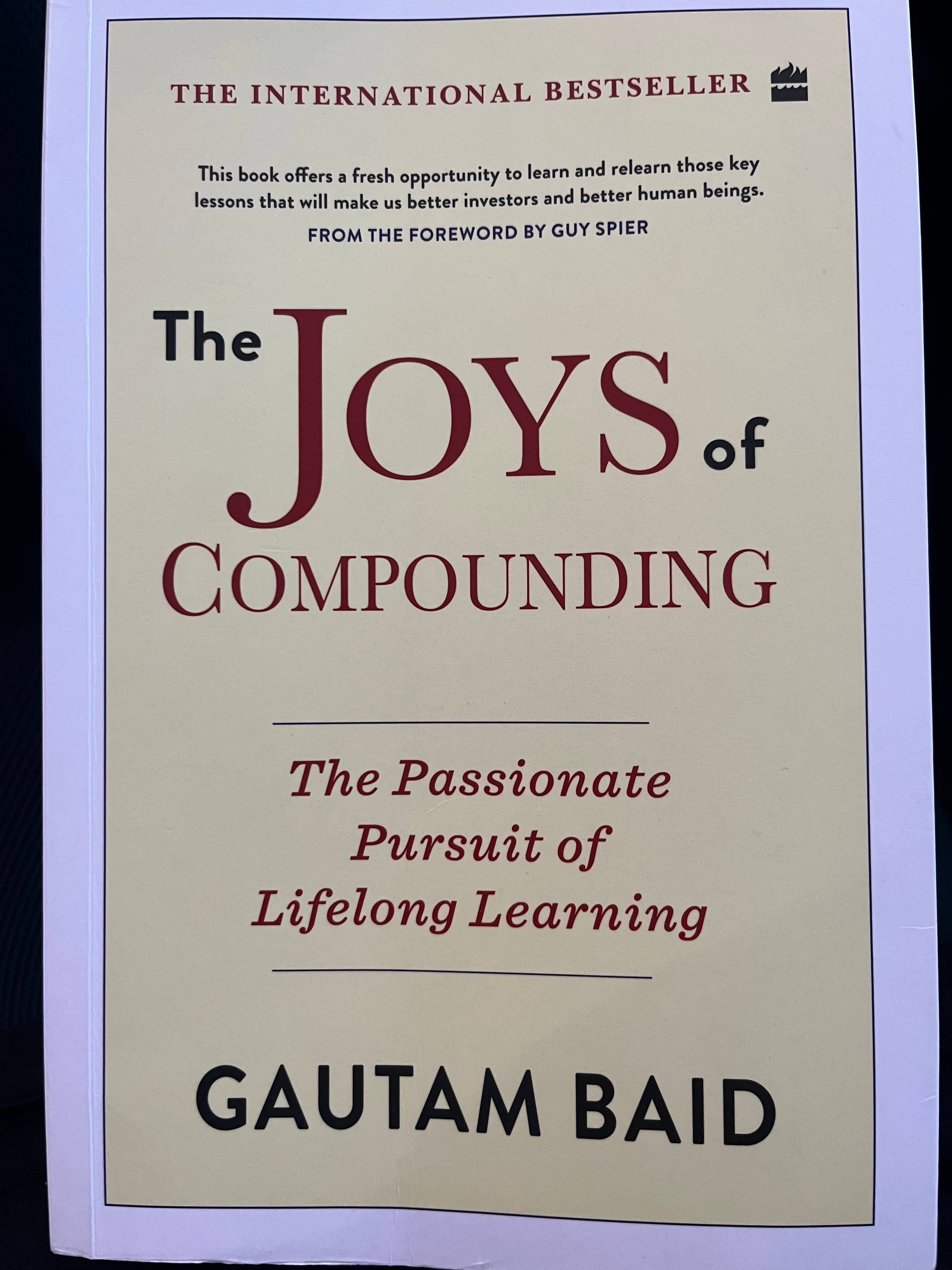
    When I read “The Joys of Compounding” by Gautam Baid, a few points in the first chapters of his book were quite powerful.

    As a young professional in Finance, I was initially struck that “Warren Buffet and Charlie Munger estimate that they spend 80 percent of their day reading or thinking about what they have read.”(9) As two well-known experts, the two ran Berkshire Hathaway. As thought-leaders in the industry, they are frequently relied on for investment direction.

    Warren Buffet pictured above reading (source)

    Baid introduced the idea to me, that reading is you investing in yourself and compounding your intelligence. I had never approached reading as a form of self-advancement like this before. Reading became an affordable way for me to learn opposed to going back to school formally. This mindset shift was powerful.

    Baid compared reading with investing:

    “the more you read, the more you build you mental repertoire. Incrementally, the knowledge you add to your stockpile will grow over time as it combines with everything new you put in there. This is compounding in action, and it works with knowledge in much the same way as it does with interest” (11).

    If you don’t consider yourself a reader, you can approach reading as an actionable way to invest in your own learning, and for all you know you might eventually grow into liking it. Reading exposes you to new subjects, storylines, vocabulary, lines of thinking, and language in general.

    Research has shown many other benefits. I highlighted three below that stuck out the most to me.

    Reading Improves Empathy

    Reading stories allows you to grow empathy, through experiencing the lives of others, feeling their emotions and being guided through their struggles and wins.

    Some research has drawn an association between reading fiction and tests of social acumen and empathy. In 2006, one study concluded that there was a correlation between the number of authors recognized and increased scores in empathy tests (Mar et. al). The research suggests that fiction may enhance the ability to understand other’s thoughts and feelings as well as provides a “simulation” of other social groups. Other research has explored this idea. It seems pretty obvious; when you learn of other people’s lives, struggles, thoughts, and emotions, you can empathize.

    When elementary and high school students in Italy and the UK read Harry Potter, one study found that they became more empathetic towards immigrants, refugees, and LGBTQ people (Vezzali et al). This was argued as being due to the exposure to social hierarchies and prejudice that can be seen in society.

    Reading Strengthens our Memory

    At a study done at University of Illinois, over an 8-week period, older adults had improvements in working memory (ability to hold things in our mind as we engage in mental processes) and episodic memory (long-term memory that involves recollection of previous experiences), due to regular, engaged reading (Lai 2023).

    Another study that echoes this, was a 14-year longitudinal study done with a representative sample of 1,962 Taiwanese individuals aged 64 and above. Those with higher reading frequencies (over once a week), were less likely to have cognitive decline at year 6, 10, and 14 (Chang et al).

    Reading can Act as a from of Stress Reduction

    In 2020, research done in Canada has shown that recreational reading was associated with reduced stress during a college school year (Levine et al.) Other studies had 24 adults participate in a stress-inducing task and then read for 60 minutes. They experienced a reduction in anxiety, heart rate, and blood pressure (Jin 1992).

    Whether a form of stress relief or as a form of advancement, reading can be beneficial for people who may struggle to focus and is good for our cognitive functioning. With technology discussed earlier, reading provides an unplugged outlet. Put on do not disturb and see how it impacts you.

    “I read to increase knowledge. I read to find meaning. I read for better understanding of others and myself. I read to discover. I read to make my life better. I read to make fewer mistakes.” (Baid 13)

    My Action Plan

    Jump forward a few months, I have been reading more and using my phone less (as much as possible but hey I never claimed to be perfect!) I found myself better able to focus and not reaching for my phone nearly as much.

    In 2025, I made the goal of reading one book per month. I am currently at 10 books for the year, with one month to go. To be honest, it will be tough to read two more in the short amount of time, but I am proud of my reading this year.

    Gautam Baid introduced how “the rich have money. The wealthy have control over their time. And time is the scarcest resource…Time is a universally depleting resource, reduced at the same rate for the wealthy as for the poor” (11). For some, reading is well within our means.

    *I also want to recognize that it is easier said than done. Reading for many is not within reach; work, kids, and other life responsibilities can prevent many from reading.*

    With that in mind, for those that might say “I have to find time,” I would respond one must make time.

    “If it matters to you, you will make time.”

    Nick Barre, CEO of Bare Performance Nutrition

    You might be asking yourself: what should I read?

    my recommendations

    To get into reading I had two things that really changed the game for me. The first was setting manageable daily goals. To form a habit, I think it is more important to build it into your daily routine and start small. I started with 10 pages everyday before bed. After I grew accustomed to that, I began to set a 20 minute timer to expand time spent reading. Soon it became second nature to read before bed.

    After creating this habit, I looked forward to going to bed and found myself reading more and more. Now I like to bring my book with me on my commute to work, often time choosing to read for the hour instead of scroll. What started as a forced task, has become an important part of my routine.

    Using apps like “Good Reads” or “Fable” can help you set goals! I personally like Fable. The app has fun visuals of the books you read over the year, describes you as a reader, and has social media type feed. You can read reviews and get book recommendations from others and create book clubs, building a sense of community. This further can provide a sense of social accountability, as you record what books you have read and when.

    My second recommendation is to try different books and genres. Find what keeps you reading, and lean into that genre! I like reading all different genres and authors, and I hope to expand to more.

    In the context of media and news, Guatam Baid claims that “the key lesson, in the pursuit of wisdom, we must read much more of what has endured over time (such as history or biographies) than what is ephemeral (such as daily news, social media trends, and the like)”(15). My personal reading goal is to read more classics and historical books in 2026. I want to gain knowledge that is timeless. For 2026, I have a goal of reading at least 15 books.

    some book recommendations to get started

    books that involve self improvement: Atomic Habits and The Joys of Compounding

    a captivating memoir: I’m Glad My Mom Died by Jennette McCurdy

    mystery/thriller: The Silent Patient by Alex Michaelides

    my book list from 2025

    1. The Joys of Compounding by Gautam Baid
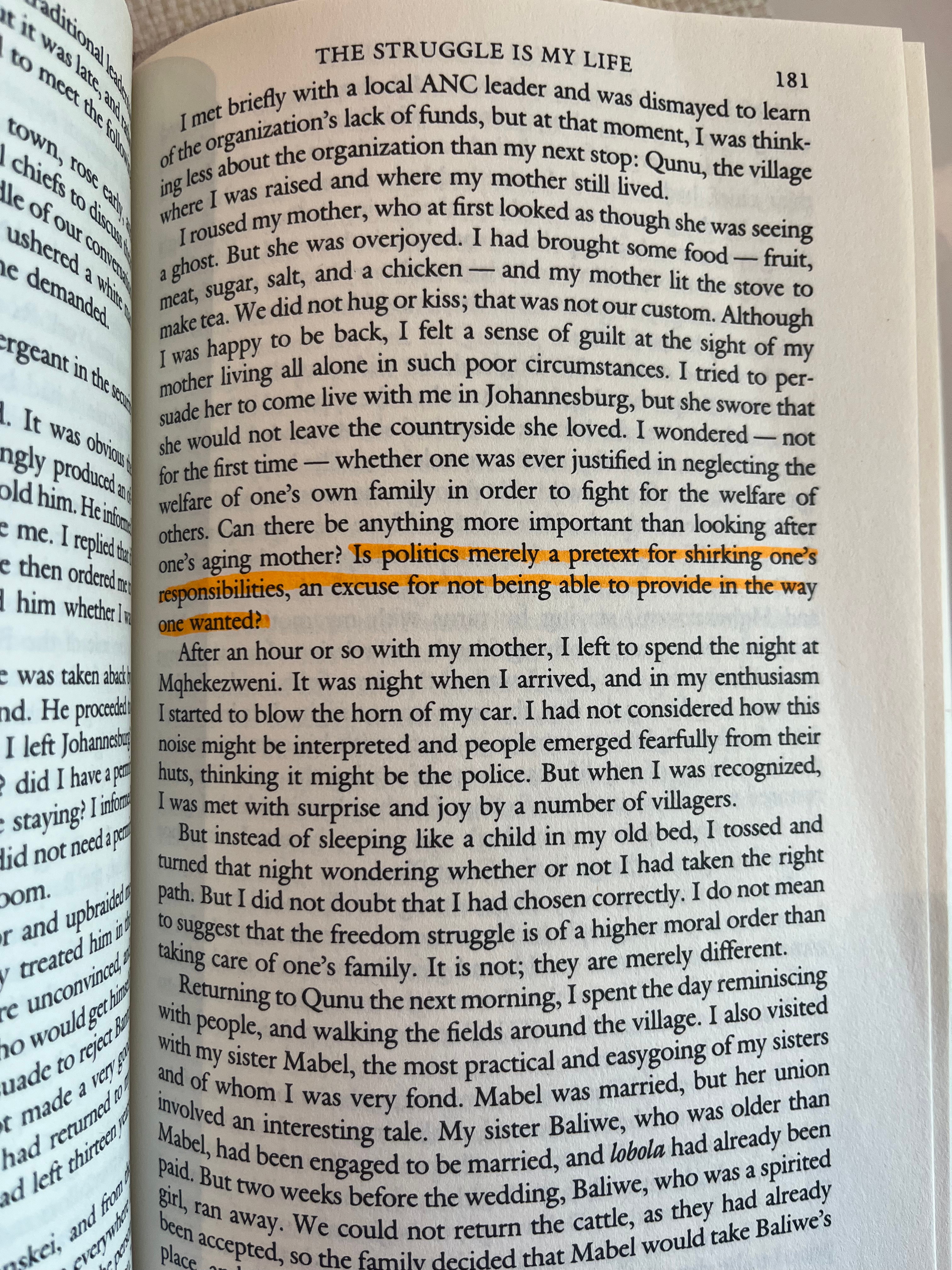
    2. Long Walk to Freedom by Nelson Mandela
    3. I’m Glad My Mom Died by Jennette McCurdy
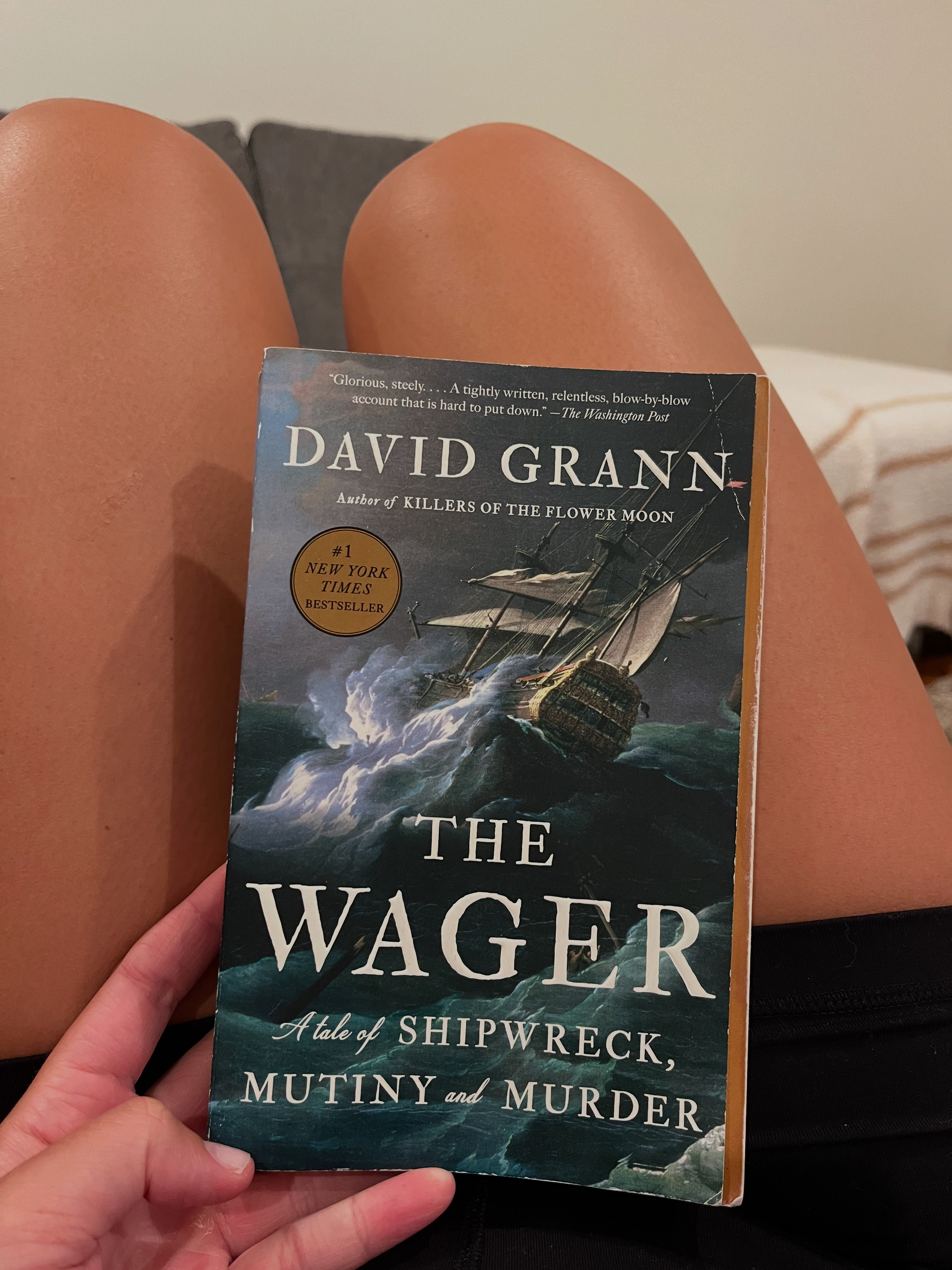
    4. The Wager David Grann
    5. Rich Dad Poor Dad by Robert T. Kiyosaki
    6. The Secret History by Donna Tartt
    7. It’s Trevor Noah: Born a Crime by Trevor Noah
    8. The Last Lecture by Randy Pausch, Jeffrey Zaslow
    9. Brutes by Dizz Tate
    10. The Economics of Public Issues by Roger LeRoy Miller
    works referenced

    Baid, G. (2023). The Joys of Compounding: The Passionate Pursuit of Lifelong Learning. Columbia Business School Publishing.

    Belkin, D. (2024, December 10). In a test of adult know-how, America comes up short. The Wall Street Journal. https://www.wsj.com/us-news/america-us-math-proficiency-falling-1b5ac73c

    Bone, J. K., Bu, F., Sonke, J. K., & Fancourt, D. (2025). The decline in reading for pleasure over 20 years of the American Time Use Survey. iScience, 28(9), Article 113288. https://doi.org/10.1016/j.isci.2025.113288

    Carrier, L. M., Rosen, L. D., & Rokkum, J. N. (2018, January 8). Productivity in peril: Higher and higher rates of technology multitasking. Behavioral Scientist. Retrieved from https://behavioralscientist.org/productivity-peril-higher-higher-rates-technology-multitasking/

    Chang, Y.-H., & Wu, I.-C., & Hsiung, C. A. (2021). Reading activity prevents long-term decline in cognitive function in older people: Evidence from a 14‑year longitudinal study. International Psychogeriatrics, 33(1), 63–74. https://doi.org/10.1017/S1041610220000812

    Great Hearts Academics. (2024, Oct 10). Sir Jonathan Bate Discusses the Loss of Literature in Schools on the BBC [Video]. YouTube.https://www.youtube.com/watch?v=f6UbKdAJytY .

    Griffey, H. (2018, October 14). The lost art of concentration: Being distracted in a digital world. The Guardian. https://www.theguardian.com/lifeandstyle/2018/oct/14/the-lost-art-of-concentration-being-distracted-in-a-digital-world

    Healthline. (2025, April 4). Benefits of reading books: How it can positively affect your life. Healthline. https://www.healthline.com/health/benefits-of-reading-books#increases-empathy

    James, W. (1890). The Principles of Psychology (Vol. 1, Ch. XI). Retrieved from https://psychclassics.yorku.ca/James/Principles/prin11.htm

    Jin P. Efficacy of Tai Chi, brisk walking, meditation, and reading in reducing mental and emotional stress. Journal of Psychosomatic Research. 1992 May; 36(4):361–370. PMID: 1593511.

    Lai, M. (2023, January 20). Research: Reading for pleasure can strengthen memory in older adults. Beckman Institute for Advanced Science and Technology. https://mcb.illinois.edu/news/2023-01-20/research-reading-pleasure-can-strengthen-memory-older-adults

    Levine, S. L., Cherrier, S., Holding, A. C., & Koestner, R. (2022). For the love of reading: Recreational reading reduces psychological distress in college students and autonomous motivation is the key. Journal of American College Health, 70(1), 158–164. https://doi.org/10.1080/07448481.2020.1728280

    Mar, R. A., Oatley, K., Hirsh, J., dela Paz, J., & Peterson, J. B. (2006). Bookworms versus nerds: Exposure to fiction versus non‑fiction, divergent associations with social ability, and the simulation of fictional social worlds. Journal of Research in Personality, 40(5), 694–712. https://doi.org/10.1016/j.jrp.2005.08.002

    Ofcom. (2018, August 2). The Communications Market 2018: Narrative report [PDF]. https://www.ofcom.org.uk/siteassets/resources/documents/research-and-data/cmr/cmr2018/cmr-2018-narrative-report.pdf?v=322208

    Thain, Maurion. (2024). Are young people’s attention spans really shrinking? It’s more complex than you might think. The Guardian. https://www.theguardian.com/commentisfree/2024/dec/26/young-people-attention-spans-online-world

    Vezzali, L., Stathi, S., Giovannini, D., Capozza, D., & Trifiletti, E. (2015). The greatest magic of Harry Potter: Reducing prejudice. Journal of Applied Social Psychology, 45(2), 105–121. https://doi.org/10.1111/jasp.12279

  • all opinions here are my own

    The Digital Age of Violence: Confronting Social Media’s Impact on the Self

    what to expect : why is social media creating violence and ways to work against the algorithms

    Social media is exacerbating divide. As companies aim to capture more attention by increasing the time users spend on their platforms, they simultaneously create addictive, destructive echo chambers.

    Social media algorithms are “technical means of sorting posts based on relevancy instead of publish time…[and they] can be written by coders who make use of machine learning”(Golinio 2021). Machine learning is exactly how it sounds: as machines perform tasks, they learn from the process and improve it. This means that as algorithms organize the content we see, they are continuously learning from and adapting based on how we interact with posts. While this personalizes our feeds to match our tastes and interests, it also increasingly leverages fear and heightened emotion to keep us scrolling.

    Research increasingly shows that we respond greater to negative news, a phenomenon called “negativity bias.” It is our biological nature to seek negative headlines and content, as neuroscientific research shows that when as we “encounter negative information, the amygdala sends signals that release vigilance and emotional arousal” (Ohman et al. 2001). This arousal and alertness can capture and hold attention. This incentivizes people to “doom-scroll,” seeking more and more content.

    On a similar vein, echo chambers are environments where people are surrounded by opinions and information that reinforce existing beliefs. Social media executives, in maximizing time spent on their platforms, are reducing exposure to conflicting ideas and show content similar to what users already engage in. By keeping people addicted to their social media, they inadvertently are isolating, polarizing, and radicalizing individuals. As a result, both the violence that has occurred and will likely continue, highlights the consequences of leaving social media companies largely unregulated.

    Scott Galloway in Prof G Markets podcast, “America’s New Age of Political Violence with Barbara F. Walter,” discussed social media in regards to Charlie Kirk’s assassination. Galloway is an NYU professor and media professional, and Barbara F. Walter is a professor at UC San Diego for the school of Global Policy and studies Political Violence.

    Scott and Barbara discuss the Facebook whistleblower, Frances Haugen. The former Facebook data scientist and product manager leaked thousands of documents to the SEC, that came to be known as the Facebook Papers. Barbara discussed the documents, and how the time spent on their platforms impacted violence, depression, anxiety, and other negative outcomes.

    The company’s research shows that it “amplified hate, misinformation, and political unrest” (Pelley, 2021). In Haugen’s experience, Facebook continuously had conflicts of interest between what was good for the public versus what was good for Facebook. In her eyes, they optimized their own interests and profits.


    From Facebook “we have evidence from a variety of sources that hate speech, divisive political speech, and misinformation on Facebook and the family of apps are affecting societies around the world”

    From the Facebook Papers, Pelley 2021

    Algorithms prioritize engagement over well-being, causing the use of polarizing and inflammatory content.

    In 2023, Meta was sued for misleading the public about safety and harming the mental health of children by 33 states (Sy and Dubnow, 2023). One PBS interview with WSJ writer, Jeff Horwitz, discussed the harm that is caused by social media platforms. He created test accounts, and found that as soon as you start following slightly suspect entities the algorithm will start pushing hard into increasingly dark content, including things like kidnapping children being a subject group (3:00-3:32).

    The company is working to “clean the system up,” according to Horwitz, however it is still a pervasive and far-reaching issue. Regulations and steps to prevent this, are at odds with their priority of privacy and freedom of speech.

    After Charlie Kirk’s death Utah Governer Spencer Cox referred to social media companies as “conflict entrepreneurs”. On NBC news, Cox said  “I believe social media has played a direct role in every single assassination and assassination attempts we’ve seen over the last five, six years…What we have done to our kids. It has taken us a decade to understand how evil these algorithms are.” People are addicted to outrage in Cox’s words, “which is the same type of dopamine, the same chemical you get from taking fentanyl and get us to hate each other.” The evolving landscape in politics has created extreme divide, with “us” versus “them” content.

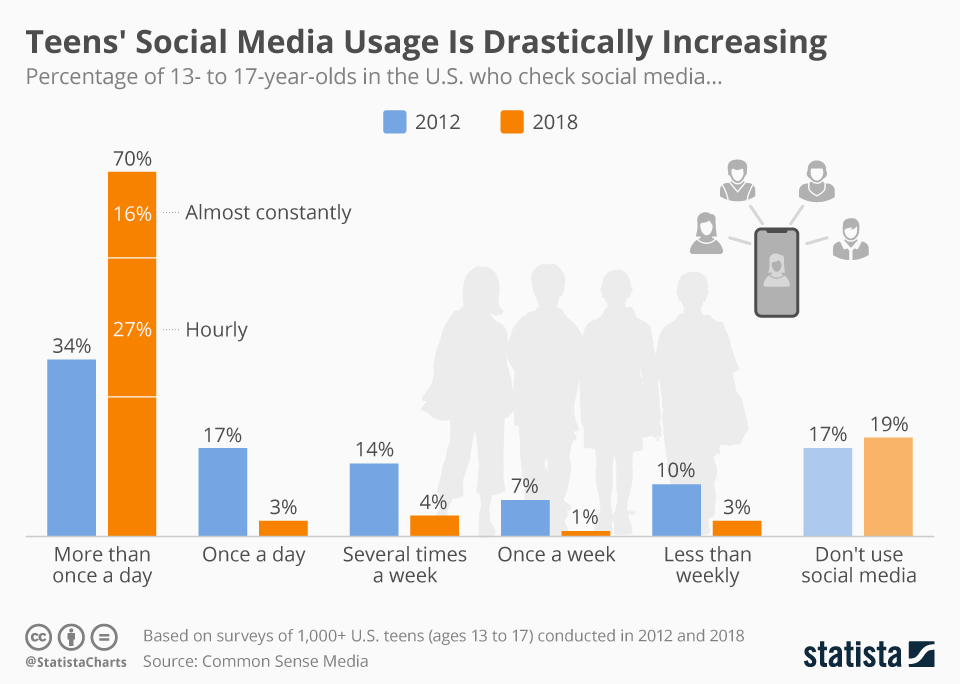
    Social media does not just have negative outcomes in regard to political acts of violence. In 2021, the Wall Street Journal published the Facebook Papers, showing that Instagram was making body image issues worse in one in three teenage girls. (Wells et al 2021). One study, done by Federica Pedalino and Anne-Linda Camerini, in the International Journal of Environmental Research and Public Health, concluded that browsing on Instagram was associated with lower levels of body appreciation, increased social comparison with influencers, and highlighted the need for public health interventions (2022).

    chart source

    The Business Incentives

    In their quarter three earnings, Meta reported $51.24 billion, showing around 26% year-over-year (YoY) growth. For a company of this size and maturity, this growth is astonishing.

    Engagement on their platforms shows daily active users, across the family of apps, at 3.54 billion, up 8% YoY. As active users increase, so does their profit. The more time spent on their platforms, the more ads users see. In Q3, ad impressions increased 14% YoY. With meta’s revenue almost entirely from ad revenue, they are incentivized to maximize spend on their apps.

    In Meta’s earnings Q3 Earnings call, CEO Mark Zuckerberg discussed that they are actively increasing the time spent on their apps, with Facebook, Threads, and Video being up 5%, 10%, and more than 30% respectively. As video grows, Instagram Reels has an “annual run rate of over $50 billion” (Earnings Call).

    Social media companies face a tradeoff between maximizing profit through user engagement and safeguarding the well-being of users and society. The growth and efficiency of this business model comes at the expense of the public good. As artificial intelligence improves, we can only assume that these problems will increase.

    Regulatory oversight of Meta and the broader social media industry has to adjust to the changing landscape. This includes addressing both direct issues, like lenient ad moderation1, and indirect affects, such as the creation of emotionally charged, fear-inducing user experiences.

    what can we do? from awareness to action

    Social media offers significant benefits to both people and businesses, and frankly, it’s not going anywhere.

    Naturally, one would suggest deleting social media as the most direct solution. However, I am not going to sit here and say to delete all social media.

    Social media still brings a lot of good. It raises awareness of important issues and facilitates collective action. It promotes transparency and accountability, helps communities grow, and spreads knowledge at unprecedented rates. The real challenge lies in learning to use it intentionally and thoughtfully.

    In my own experience, my algorithm has made me “hooked” at many times, and 100% has capitalized on what makes my emotions heightened. For example, I respond very well to “hopecore,” essentially feel-good videos like military homecomings, gifting a dog, or surprising a loved one. I too have felt the sense of “doom” that social media perpetuates. But I have been taking an active role against it, and want to help others to do the same.

    To start, I want to remind anyone reading this, that the digital world, is not real. Yes, you talk to real people and interact with real things, but I want to remind you that this is a constructed environment. People portray a snippet of their life, carefully curated and constructed. Try not to equate online interactions to genuine human connections and experiences.

    1. create more than you consume

    I want to start with a mindset shift of consumption in general. Consumption is usually thought of as what we are eating or what we buy. But we are affected by all consumption. What movies we watch, books we read, people we spend time with, and social media accounts we follow. Take inventory of what you are consuming, and be mindful of that consumption. We are not made to spend everyday going from little screen, to medium screen, to big screen.

    Try more hobbies. Physical hobbies. Painting, walking, reading, you get the point. I made a list of things that you can do instead of scroll:

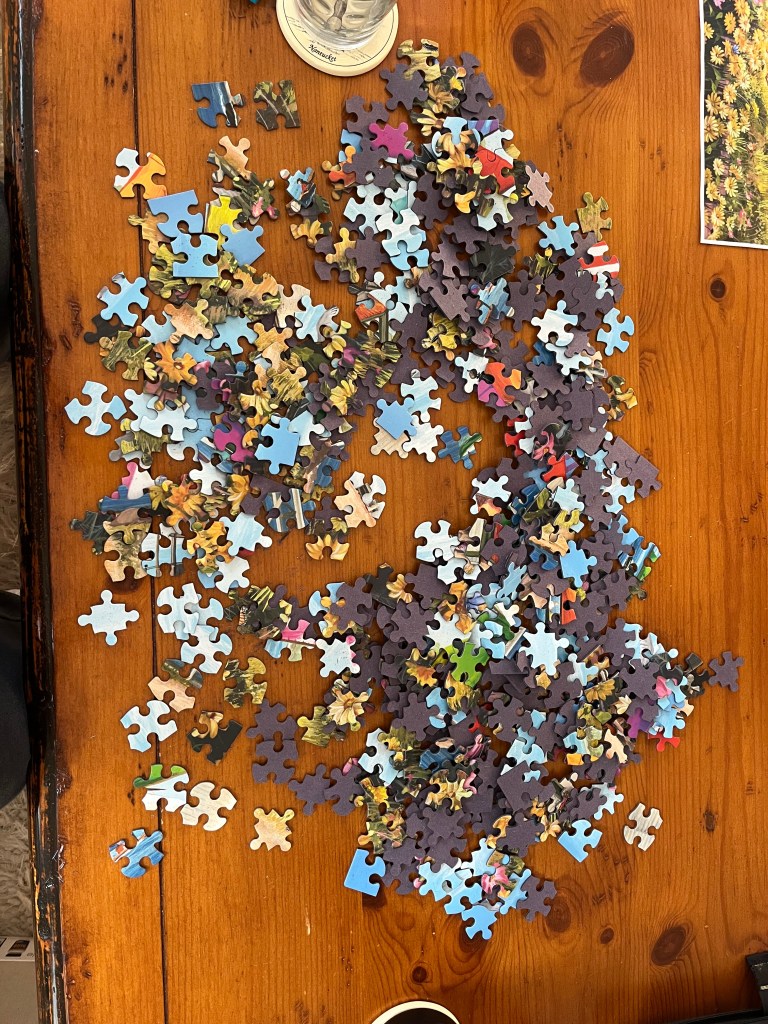
    • buy a puzzle
    • create and plan a friends night
    • try a new restaurant
    • deep clean your space
    • bake something
    • make a vision board
    • write something
    • take cute pictures of a city or town you live in
    • find new music
    • do a 15 minute yoga video

    also, you can create in the digital world! write a blog like this, make a youtube video, whatever you want! just try to balance the creation with consumption

    2. take digital breaks, and encourage those around you to do it to

    Do anything that “adds a step” to opening your phone, or acts as a barrier to entry. From Atomic Habits, written by James Clear, when a habit is harder to start, the likelihood of doing it drops sharply. This is the principle of “friction,” the more friction added, the less-likely a behavior will occur. Some ways of adding friction to reaching for your phone: putting your phone in another room when working, turning off notifications, or deleting the apps Mon-Fri. If you set a limit on social media use per day, it pauses mindless scrolling to remind you that time is up. Mine is set for an hour, and that notification alone prevents me from scrolling.

    While taking these measures, normalize talking to your friends about this. Talk to your friends and family about social media. This is a collective struggle and problem, and the most people around you that are conscious of it, the more you can mutually grow.

    3. reflect more: journal daily

    Reflection is the first step towards growth. Journal and check-in with yourself frequently. Especially try to reflect after a doom-scroll. Do you feel uplifted? Do you feel anxious? Do you suddenly feel like you need more material things? (a common feeling social media gives me).

    Some journaling prompts I love :

    what is bringing joy to my life right now?

    what is taking away?

    where are ways that I want to grow?

    how do I want to spend my time?

    I can almost assure you that aside from content creation, these answers won’t be related to social media. I at least don’t want to grow through continuous comparison and doom scrolling.

    4. if you scroll, scroll with intention

    All of this to say, you can also take back control of your scrolling. While algorithms are created for us, we decide what we interact with, who we follow, what we send to friends, what we like, etc. Be conscious of who and what you follow, always.

    thanks for reading ❤

    some ways i have recently unplugged

    works referenced:

    Cox, S. (2025, September 14). Utah Gov. Spencer Cox calls social media companies ‘conflict entrepreneurs’ that share blame for Charlie Kirk’s death. Business  Insider. Retrieved from https://www.businessinsider.com/charlie‐kirk‐death‑social‑media‑role‐utah‑governor‑spencer‑cox‑2025‑9

    Golino, M. A. (2021, April 24). Algorithms in social media platforms: How social media algorithms influence the spread of culture and information in the digital society. Institute for Internet and the Just Society. https://www.internetjustsociety.org/algorithms-in-social-media-platforms

    Horwitz, J. (2025, November 6). Meta is earning a fortune on a deluge of fraudulent ads, documents show. Reuters. https://www.reuters.com/investigations/meta-is-earning-fortune-deluge-fraudulent-ads-documents-show-2025-11-06/

    Marano, H. E. (2003, June 20). Our brain’s negative bias: Why our brains are more highly attuned to negative news. Psychology Today. https://www.psychologytoday.com/us/articles/200306/our-brains-negative-bias

    Meta Platforms, Inc. (2025, October 29). Meta Reports Third Quarter 2025 Results. https://investor.atmeta.com/investor-news/press-release-details/2025/Meta-Reports-Third-Quarter-2025-Results/default.aspx?utm_source=chatgpt.com

    Meta Platforms, Inc. (2025, October 29). Third quarter 2025 results conference call transcript [Transcript]. https://s21.q4cdn.com/399680738/files/doc_financials/2025/q3/META-Q3-2025-Earnings-Call-Transcript.pdf

    Ohman, A., Flykt, A., & Esteves, F. (2001). Emotion drives attention: Detecting the snake in the grass. Journal of Experimental Psychology: General, 130(3), 466–478. https://doi.org/10.1037/0096-3445.130.3.466

    Riva, G., Monti, R. P., Bassi, M., Bianchi, D., Franchin, L., & Monaro, M. (2022). Instagram use and body dissatisfaction: The mediating role of upward social comparison with peers and influencers among young females. International Journal of Environmental Research and Public Health, 19(3), 1543. https://doi.org/10.3390/ijerph19031543

    Wells G., Horwitz J., Seetharaman D. The Facebook Files. Wall Street Journal. Sep 14, 2021.

    Sy, S., & Dubnow, S. (2023, December 26). States suing Meta accuse company of manipulating its apps to make children addicted. PBS NewsHour. https://www.pbs.org/newshour/show/states-suing-meta-accuse-company-of-manipulating-its-apps-to-make-children-addicted

    1. The lack of regulatory oversight over the social media business is further seen in advertising. Meta earns about $7 billion in annualized revenue from scam advertisements (Horwitz 2025). Meta accepts revenue from sources expected of fraud, showing a “lack of regulatory oversight of the advertising industry,” one fraud examiner, Sandeep Abraham said. ↩︎

    0

    Comments

    Leave a comment

  • all opinions here are my own

    The Start of M-FOUR

    Hi, I’m Megan! I just entered the work force this past July after finishing college. At 22, I have a lot to learn, and I wanted a space to put it all down. Stepping into full-time work made me realize how important it is to keep creating and learning in new areas. This will be a space for all my passion projects and reflections, across the four spaces I love most: markets and investing, movement and lifting, mental health and well-being, and personal finance. Follow along as I learn, grow, and share.

    The Four Ms

    Mind

    Mental and spiritual health has always been a focus in my adult life. The established pillars that I prioritize first are movement, social connectivity, nutrition, and sleep. This space is dedicated to exploring habits, routines, personal reflection, and overall mental well-being.

    Markets and Money

    Money and commerce are a force that drive us, shaping both what we value and how deeply we value it. What we exchange to improve our lives, is impacted by the markets and our use of money. Whether buying your first home, finding a job, or investing for retirement, we all depend on the market. This portion of the blog is centered on the understanding of our financial systems and news (markets), and then our personal decisions (money).

    How we interact and make decisions is a lifelong learning that I am far from completing. In my opinion we never get it necessarily right, we just get it less and less wrong.

    Movement

    My love for movement started with strength training back in high school. Over time, it has grown into something much broader, from rock climbing with friends to hiking in a new place. Movement is important for my daily routine, as a way to a manage stress and a key to my long-term health. I will use this space to talk about progress, setbacks, and rewards that come from an active lifestyle.